



Home Inspectionin Westfield, NJ
Westfield’s premier collection of 1890s–1950s Colonials, Tudors, Victorians, and Craftsman homes surrounding a beautiful walkable downtown — with direct Manhattan rail access and Union County’s finest schools — makes oil tanks, knob-and-tube wiring in older homes, cast iron plumbing, asbestos, aging boilers, and slate roofs the comprehensive inspection priorities for buyers in this highly competitive market.
✅ 30+ Years Experience
✅ 13,000+ Inspections Completed
✅ Northern NJ Specialist
What Our Clients Say
★★★★★ Google Reviewed — Hundreds of 5-Star Ratings
“Michael was very good and very thorough. He has very good knowledge of things.”
— Muhammad K., Westfield, NJ
“Mike was very thorough and walked through everything. He took his time and answered all questions and concerns.”
— Ambereen K. B., Union, NJ
“Michael is a pro. This is our third home he surveyed. Highly recommended!
J.C., Denville, NJ January 4, ’24
Excellent service. Excellent explanations. On time for a last minute booking!”
— Arthur A., Mountainside, NJ
“On time, on point, very satisfied..”
— C. R., Summit, NJ
“I’m very satisfied. Very professional Guy. I’m very grateful.”
— Dante M., Union, NJ
“Excellent inspection”
— Danika P. & Brian C., Union Township, NJ
Home Inspections in Westfield, NJ
Westfield is a Union County town of approximately 30,000 residents that has consistently maintained its position as one of New Jersey’s most desirable and prestigious communities. Its walkable downtown — centered on the Westfield Train Station and anchored by Trader Joe’s, an independent bookstore, acclaimed restaurants, and a farmers market of regional significance — creates a commercial vitality that few New Jersey suburbs can match. The combination of architectural distinction, educational excellence through Westfield High School, and direct rail access to Manhattan has sustained Westfield’s appeal across generations of buyers and made it one of New Jersey’s most competitive residential markets.
Westfield’s residential streets are lined with a remarkable collection of late-Victorian and Edwardian homes — Queen Annes, Colonial Revivals, Foursquares, Craftsman bungalows, and Tudor Revivals built between 1890 and 1940 — that represent Union County residential architecture at its finest and most varied. The town’s older neighborhoods, particularly those surrounding the downtown and near Mindowaskin Park, contain houses of genuine architectural significance that have been carefully maintained by generations of preservation-minded owners. Post-war Cape Cods and split-levels in the peripheral neighborhoods provide a more accessible entry point into the Westfield school district.
For home buyers, Westfield’s architectural heritage and competitive market make comprehensive inspection essential — in a market where properties regularly sell over asking price with multiple offers, the thorough inspection becomes the primary financial protection available to the buyer.
Key neighborhoods and areas: Key areas include the historic neighborhoods surrounding the downtown and Westfield Station along Elm Street and Mountain Avenue, the prestigious estates along Brightwood Road and Kimball Avenue, the established Colonial and Tudor streets of the central residential sections, the Mindowaskin Park neighborhood, and the post-war residential development in the town’s peripheral areas near the Scotch Plains and Mountainside borders.
Community & market context: Westfield is served by NJ Transit’s Raritan Valley Line at Westfield Station, providing service to Newark Penn Station. Home prices typically range from $750,000 to $2.5M+ for single-family homes, with the finest pre-war homes on premium streets commanding the highest prices. Westfield High School has consistently ranked among Union County’s top public schools.
What Michael Finds in Westfield Homes
Westfield home inspections in the town’s pre-war housing stock — which includes the vast majority of its most architecturally significant and most sought-after properties — require comprehensive evaluation of early-twentieth-century residential systems at their most complex. Oil tanks are virtually universal in Westfield’s older homes — underground in yards and aboveground in basements — and oil tank sweeps are strongly recommended for any older property where tank history is not fully documented. Knob-and-tube wiring is found in the town’s oldest homes, sometimes as the primary branch circuit system and commonly in walls and attic spaces where later panel upgrades did not include complete rewiring.
Cast iron drain lines in Westfield’s pre-war homes require evaluation for root intrusion from the town’s magnificent mature street trees. Asbestos pipe insulation on steam distribution mains is standard in homes with original steam boiler systems. Slate roofing on the finest Victorian and Colonial homes requires specialized evaluation. Original masonry chimneys with deteriorated mortar joints, plaster walls over wood lath, and original steel casement windows are standard features in the oldest homes that require documentation and evaluation of remaining service life.
No matter what Michael finds, his job is to give you a complete, honest picture of your Westfield property — so you can negotiate from knowledge, not guesswork. Schedule your inspection today.
Westfield is one of Union County’s most desirable communities — a well-established commuter town with a vibrant downtown, top-ranked schools, and a housing stock that ranges from Victorian-era Colonials and Craftsman bungalows near the train station to post-war ranches and colonials in the surrounding neighborhoods. Buyers come to Westfield for the walkable downtown, the NJ Transit access, and the quality of the schools. They need to understand that the homes that define Westfield’s character are also among the oldest and most complex in Union County.
Westfield’s Housing Stock — What to Expect by Era
Pre-War and Early Post-War (1900–1950)
Westfield’s most architecturally distinctive homes — the Colonials, Tudors, and Craftsman bungalows within walking distance of the downtown and train station — date to the first half of the 20th century. These homes consistently present knob-and-tube wiring (original or partially retained), galvanized steel supply lines at or past service life, cast iron drain systems, and oil heat legacy with potential underground storage tanks. A century of owner modifications — some done properly, some not — is part of the inspection profile of every pre-war Westfield home.
Post-War Development (1950–1980)
Westfield’s post-war expansion produced colonials and ranches in the neighborhoods surrounding the historic core. Homes from the 1965–1975 window frequently contain aluminum branch circuit wiring. Aging HVAC equipment, original windows, and deferred maintenance in long-owner-occupied homes are consistent findings in this era.
Electrical
Knob-and-tube wiring in Westfield’s oldest homes, often found beneath blown-in attic insulation, is among the most consequential findings in this market. The insurance implications are significant. Aluminum wiring in 1965–1975 construction requires full remediation. Missing GFCI protection in kitchens, bathrooms, garages, and exterior locations is found in virtually every pre-1980 Westfield home.
Plumbing
Galvanized steel supply lines are the norm in pre-1970 Westfield homes. Reduced pressure at upper floors is the most visible symptom. Full replacement is the definitive solution — buyers should price the work with a licensed plumber before their contingency expires. Cast iron drain stacks in the oldest homes are commonly 80 to 100 years old and may be significantly deteriorated internally.
Basement Water Intrusion
Westfield’s terrain and its concentration of older homes with aging foundation waterproofing systems make basement water intrusion a consistent concern. Michael evaluates basement conditions carefully and notes when interior drainage systems indicate a property with a documented water history.
Your Inspector: Michael Del Greco, CMI
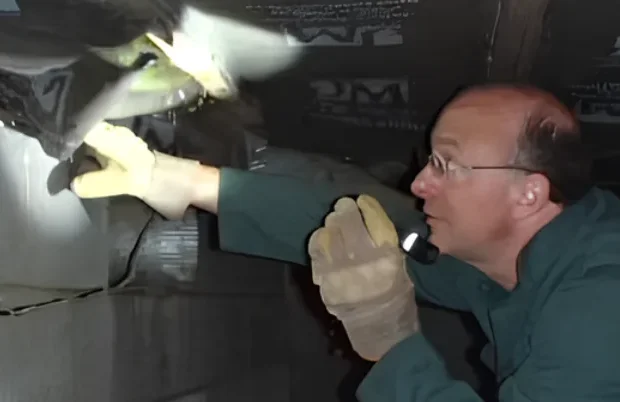
Michael Del Greco is a Certified Master Inspector with over 30 years of experience in northern New Jersey real estate. He has personally completed more than 13,000 home inspections — every one of them performed by him, not a hired employee or subcontractor.
Michael is also passionate about what makes a great inspection — thoroughness, communication, and giving buyers the information they need to make confident decisions.
- ✅ Certified Master Inspector (CMI)
- ✅ 30+ Years Northern NJ Experience
- ✅ 13,000+ Inspections Performed
- ✅ Radon Measurement Certified
- ✅ Member, InterNACHI
- ✅ Fully Licensed (NJ #24GI00012100)
- ✅ See our full FAQ
Common Questions About Westfield Home Inspections
How long does a home inspection in Westfield take?
Most Westfield home inspections take 2.5 to 4 hours depending on the size, age, and condition of the property. Older pre-war homes and larger properties typically take longer. See our full FAQ.
Should I be present for the inspection?
Your presence is required at the inspection. Walking through the home with your inspector is one of the most valuable things you can do as a home buyer. Here are questions to ask during the inspection.
Do you offer radon testing and other add-on services?
Yes. In addition to a standard home inspection, we offer additional services such as radon testing, WDI inspection, septic inspection, oil tank search, lead paint testing, and sewer scope — all especially useful for Northern New Jersey properties. These can be added when you schedule, and results are processed by certified professionals and included with your inspection report.
How do I schedule a Westfield home inspection?
Call our office at (973) 812-5100 or use our contact form. Our office staff answers the phone and can typically schedule within 24–48 hours.
Ready to Schedule Your Westfield Home Inspection?
Don’t let your contingency period expire without a thorough inspection. Call our office to schedule the most comprehensive home inspection in Northern New Jersey.


