


Home Inspection in Fort Lee, NJ
Fort Lee’s predominantly high-rise and mid-rise condominium community — anchored at the eastern approach of the George Washington Bridge — requires specialized condo inspection expertise covering unit-level systems, building envelope performance, and HOA due diligence.
✅ 30+ Years Experience
✅ 13,000+ Inspections Completed
✅ Northern NJ Specialist
What Our Clients Say
★★★★★ Google Reviewed — Hundreds of 5-Star Ratings
“Great and very informative inspection.”
— Aaron M., Fort Lee, NJ
“Inspector was informative, patient and detailed during inspection.”
— Fatjon K, Fort Lee, NJ
“Took his time to explain and give proper terms/common. Would recommend”
— Alexa Q., Fairview, NJ
“Ontime, very thorough. Answered my many questions.”
— Anadina G., Rutherford, NJ
“Mike is very thorough and helpful.”
— Ashley & Anthony F., Hawthorne, NJ
“Very informative. Great experience overall! Thank you.”
— Amber P. & Mario B., Lyndhurst, NJ
Home Inspections in Fort Lee, NJ
Fort Lee is a Bergen County borough of approximately 38,000 residents that has transformed from a modest riverside community into one of the state’s most densely developed and cosmopolitan addresses. Situated at the eastern approach to the George Washington Bridge — the world’s busiest motor vehicle bridge — Fort Lee has unmatched accessibility to Manhattan, just minutes away via the upper or lower levels of the bridge. This accessibility, combined with New Jersey’s favorable tax treatment compared to New York City, has made Fort Lee a preferred address for Korean-American families, international business executives, and Manhattan professionals seeking lower-cost alternatives to the city.
Fort Lee’s residential landscape is dominated by high-rise and mid-rise condominium and cooperative apartment buildings, many of which were constructed in the 1970s and 1980s and are now undergoing significant capital improvement programs. The borough’s skyline along Main Street and the Route 46 corridor is defined by residential towers offering floor-to-ceiling views of the Manhattan skyline, the George Washington Bridge, and the Hudson River. A smaller stock of single-family homes and two-families occupies the borough’s interior streets, away from the commercial and high-rise corridor.
For buyers in Fort Lee’s dominant condominium market, the inspection must be complemented by thorough HOA due diligence — reviewing meeting minutes, reserve fund studies, and pending special assessments — as the financial health of the building’s governance structure is as important as the physical condition of the unit itself.
Key neighborhoods and areas: Key areas include the Main Street high-rise corridor, the Linwood Avenue and Palisade Avenue residential sections with both high-rise and single-family housing, the neighborhood near Fort Lee Historic Park at the GWB approach, the Parker towers complex, and the established single-family streets of the borough’s western interior.
Community & market context: Fort Lee is served by NJ Transit bus routes with direct service to the Port Authority Bus Terminal and the George Washington Bridge Bus Station. Home and condominium prices range from approximately $350,000 for smaller units in older buildings to $1.5M+ for luxury units in newer towers. The borough is served by the Fort Lee School District for K-12.
What Michael Finds in Fort Lee Homes
Fort Lee condominium inspections focus on the systems and components within or directly serving the unit. HVAC systems — typically individual through-wall packaged terminal air conditioners or fan-coil units in older buildings, or split-system heat pumps in newer construction — require evaluation for operational performance, filter condition, and drainage system integrity. Electrical panels within the unit should be evaluated for adequate capacity and proper breaker condition. Water heaters within units require evaluation of age and condition; many Fort Lee buildings have individual water heaters in each unit that are relatively straightforward to replace.
In the borough’s older condominium buildings from the 1970s and 1980s, building-envelope performance is a priority concern. Cast iron drain risers in these buildings are commonly original — 40 to 50 years old — and may have active corrosion or past repairs that should be disclosed through the building’s maintenance records. Window systems in older high-rise buildings often have failing seals and thermal bridging at metal frames that contribute to condensation and heat loss. Michael recommends that buyers of Fort Lee condominiums obtain and review at least three years of HOA meeting minutes and a current reserve fund study before closing.
No matter what Michael finds, his job is to give you a complete, honest picture of your Fort Lee property — so you can negotiate from knowledge, not guesswork. Schedule your inspection today.
Fort Lee is one of Bergen County’s most densely developed municipalities — a community defined by its position at the George Washington Bridge and by a housing market that includes everything from pre-war single-family homes and two-families in the residential neighborhoods to a significant stock of mid-century and newer high-rise condominiums along the Palisades. It is one of the most varied inspection markets in Bergen County, and one where the distinction between single-family, condo, and co-op inspections matters significantly.
Single-Family and Two-Family Homes
Fort Lee’s residential neighborhoods contain pre-war and post-war single-family homes and two-families with the inspection profile typical of older Bergen County construction. Knob-and-tube wiring in pre-war properties, galvanized steel supply lines in pre-1970 homes, and oil heat legacy with potential underground storage tanks are consistent findings. Aluminum branch circuit wiring is found in 1965–1975 construction.
High-Rise and Condo Inspections
Fort Lee has a significant high-rise condo and co-op market — buildings from the 1960s through the 1980s along with newer waterfront development. For condo and co-op buyers, Michael’s inspection covers the interior of the unit and systems within it. The building’s common areas, exterior, elevators, and shared mechanical systems are the HOA’s or building management’s responsibility — but their condition affects the buyer’s investment directly. Michael notes observable building-level concerns and strongly recommends buyers review HOA financials, reserve studies, and building maintenance history before closing.
Electrical and Plumbing in Older Units
Mid-century Fort Lee condo buildings frequently have electrical systems and plumbing that have not been substantially updated since original construction. Galvanized supply risers serving multiple floors, original electrical panels in individual units, and aging fixture connections are consistent findings in 1960s–1970s Fort Lee buildings.
Your Inspector: Michael Del Greco, CMI
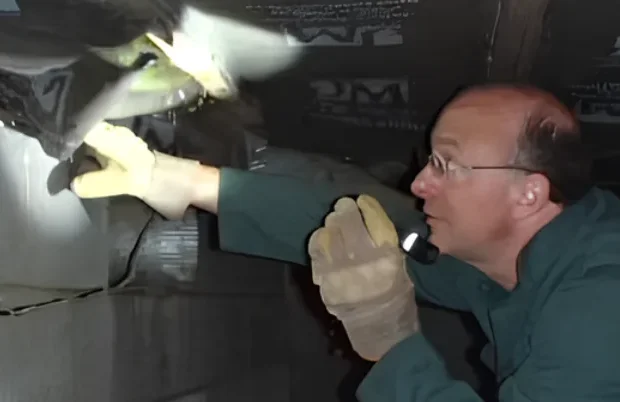
Michael Del Greco is a Certified Master Inspector with over 30 years of experience in northern New Jersey real estate. He has personally completed more than 13,000 home inspections — every one of them performed by him, not a hired employee or subcontractor.
Michael is also passionate about what makes a great inspection — thoroughness, communication, and giving buyers the information they need to make confident decisions.
- ✅ Certified Master Inspector (CMI)
- ✅ 30+ Years Northern NJ Experience
- ✅ 13,000+ Inspections Performed
- ✅ Radon Measurement Certified
- ✅ Member, InterNACHI
- ✅ Fully Licensed (NJ #24GI00012100)
- ✅ See our full FAQ
Common Questions About Fort Lee Home Inspections
How long does a home inspection in Fort Lee take?
Most Fort Lee home inspections take 2.5 to 4 hours depending on the size, age, and condition of the property. Older pre-war homes and larger properties typically take longer. See our full FAQ.
Should I be present for the inspection?
Your presence is required at the inspection. Walking through the home with your inspector is one of the most valuable things you can do as a home buyer. Here are questions to ask during the inspection.
Do you offer radon testing and other add-on services?
Yes. In addition to a standard home inspection, we offer additional services such as radon testing, WDI inspection, septic inspection, oil tank search, lead paint testing, and sewer scope — all especially useful for Northern New Jersey properties. These can be added when you schedule, and results are processed by certified professionals and included with your inspection report.
How do I schedule a Fort Lee home inspection?
Call our office at (973) 812-5100 or use our contact form. Our office staff answers the phone and can typically schedule within 24–48 hours.
Ready to Schedule Your Fort Lee Home Inspection?
Don’t let your contingency period expire without a thorough inspection. Call our office to schedule the most comprehensive home inspection in Northern New Jersey.


