



Passaic County is one of the most diverse real estate markets in northern New Jersey. From the pre-war urban neighborhoods of Paterson and Passaic to the post-war colonials of Wayne and Hawthorne, from the rural properties of West Milford and Ringwood to the riverfront homes of Little Falls and Totowa — each town presents its own specific inspection challenges.
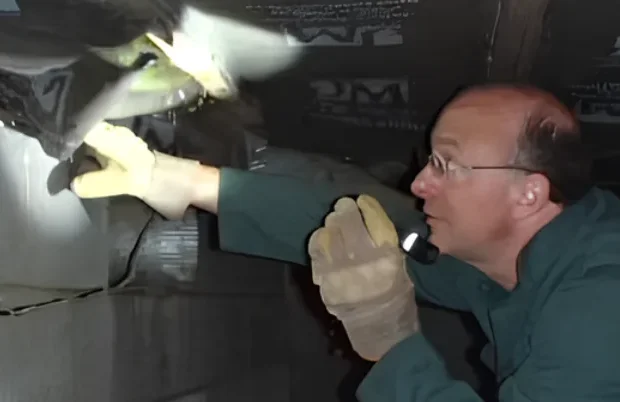
Michael Del Greco has been performing home inspections in Passaic County since 1993. Over more than 30 years, he has inspected homes in every town in the county, in every era of construction, and at every price point. Here is what he finds most often.
Aging Electrical Systems
Electrical deficiencies are among the most common — and most important — findings in Passaic County homes. The county’s housing stock spans nearly a century of construction, and each era brought its own electrical standards that are now outdated.
Knob-and-Tube Wiring
Homes built before 1950 — common throughout Paterson, Passaic, Clifton, and the older sections of Hawthorne and Little Falls — frequently retain original knob-and-tube wiring, either as the primary system or mixed with later additions. Knob-and-tube wiring is not inherently dangerous when properly maintained, but it lacks a ground conductor, is incompatible with modern appliance loads, and becomes a serious hazard when covered with blown-in insulation — a combination Michael finds regularly in Passaic County attics.
Many homeowners’ insurance carriers will not insure homes with active knob-and-tube wiring, or will require full replacement as a condition of coverage. Buyers should confirm their intended insurer’s position before closing.
Undersized Electrical Service
60-amp electrical service was standard in homes built before the 1960s. Modern households routinely require 200 amps. Homes with 60-amp or 100-amp service may need a service upgrade to support modern appliance and HVAC loads — a finding that affects both safety and functionality.
Aluminum Branch Circuit Wiring
In Passaic County homes built between roughly 1965 and 1975 — many colonials and ranches in Wayne, Pompton Lakes, and the developing suburbs of that era — aluminum branch circuit wiring was widely used as a lower-cost alternative to copper. Aluminum wiring at connections and devices is a documented fire hazard due to the metal’s expansion and contraction properties. Remediation requires either full rewiring or installation of approved anti-oxidant compound and CO/ALR-rated devices at every outlet and switch.
Missing GFCI Protection
Ground Fault Circuit Interrupter protection is required by current code in kitchens, bathrooms, garages, and exterior locations. In older Passaic County homes, missing GFCI protection is one of the most consistently found deficiencies — present in nearly every pre-1980 home Michael inspects. It is also one of the more straightforward safety improvements a buyer can make after closing.
Plumbing — Galvanized Steel Supply Lines
In Passaic County homes built before 1970, galvanized steel supply piping is extremely common. Galvanized steel has a functional service life of 40 to 70 years depending on water chemistry and usage. In homes at or past the end of that range, Michael regularly finds:
- Significantly reduced water pressure at fixtures due to interior corrosion and mineral buildup
- Discolored water — orange or brown tinting — indicating active corrosion
- Pinhole leaks at fittings and joints
- Piping that is visibly corroded or has been previously repaired with dissimilar materials
Full replacement of a galvanized supply system is a significant project. Buyers purchasing older Passaic County homes should have a clear understanding of the plumbing’s condition and age before closing, and should confirm the scope and cost of any necessary work with a licensed plumber before the expiration of their inspection contingency.
Oil Heat and Underground Oil Tanks
Oil heat remains prevalent throughout Passaic County, particularly in homes built before 1980. Along with active oil heating systems, Michael frequently encounters the legacy of older oil systems — abandoned underground oil tanks.
Above-Ground Oil Tanks
Indoor oil tanks in basements or utility rooms are examined for condition, age, and signs of leakage. Tanks older than 20-25 years are approaching the end of their service life and may require replacement. A tank that has leaked — even a small amount — can create an environmental remediation situation.
Underground Oil Tanks
Underground oil storage tanks are beyond the scope of a standard home inspection, as they are not visible or accessible. However, in Passaic County’s older housing stock — particularly in Wayne, Pompton Lakes, Ringwood, and the rural townships — abandoned underground oil tanks are common. A conversion to gas heat decades ago does not mean the tank was properly decommissioned.
Michael strongly recommends an underground oil tank scan for any Passaic County property built before 1985 where oil heat was historically used, regardless of the current heating system. A scan by a qualified specialist is straightforward and can prevent a significant environmental liability from becoming the buyer’s problem after closing.
Foundation and Water Intrusion
Basement water intrusion is one of the most common findings in Passaic County — and one of the most important to evaluate carefully. The county’s topography and the proximity of many neighborhoods to the Passaic River and its tributaries make proper drainage and foundation integrity critical concerns for buyers.
Foundation Cracks
In poured concrete foundations — common in post-war Passaic County construction — vertical and diagonal cracks appear as the foundation settles and the concrete cures over decades. Not all cracks are structurally significant, but some indicate ongoing movement or water penetration that requires further evaluation by a licensed structural engineer. Michael documents every crack, describes its characteristics, and provides a clear assessment of whether further evaluation is warranted.
In older block foundation homes — found throughout the urban neighborhoods of Paterson, Passaic, and Clifton — bowing or step-cracking in the block wall can indicate soil pressure that requires professional evaluation.
Evidence of Water Intrusion
Staining on basement walls and floors, efflorescence (white mineral deposits), rust marks on stored items, and deteriorated drywall are all signs of past or present water intrusion. Many Passaic County homeowners have installed interior drainage systems or sump pumps to manage water — Michael evaluates these systems and their condition, and notes when the presence of a drainage system indicates a property with a documented water history.
Grading and Drainage
Improper grading — land that slopes toward the foundation rather than away from it — is a consistent contributor to basement water problems throughout the county. Michael evaluates the grading and drainage around every home and notes conditions that are directing water toward the foundation.
Radon
New Jersey — and northern New Jersey in particular — is a high-radon state. Passaic County sits in a geological zone with elevated radon potential, and Michael recommends radon testing for every home purchase in the county, regardless of construction type or location.
Radon is a colorless, odorless, radioactive gas that enters homes through foundation cracks, floor-wall joints, and soil penetrations. It is the second leading cause of lung cancer in the United States. A home can have elevated radon levels regardless of age, condition, or neighborhood.
Michael is a licensed New Jersey Radon Measurement Technician (License #MET10521, since 1993). Radon testing is a separate service that can be added to any inspection appointment. He places a smart continuous radon monitor in the lowest livable area of the home, retrieves it after a minimum 48-hour test period under closed-house conditions, and provides lab-certified results.
Older Homes in Paterson, Passaic, and Clifton
The urban neighborhoods of Paterson, Passaic, and parts of Clifton contain some of the oldest housing stock in the county — many homes date to the early twentieth century, and some to the nineteenth. These properties present a specific cluster of inspection concerns:
- Knob-and-tube or early replacement wiring — electrical systems that have been partially updated over decades, often with mixed wiring types and improper connections
- Cast iron drain stacks — original cast iron waste piping in these homes is commonly 80 to 100 years old and may be deteriorated internally even when it appears intact externally
- Lead paint — homes built before 1978 may contain lead-based paint. In pre-1940 homes, the probability is very high. Lead paint testing is a separate service available by appointment
- Asbestos-containing materials — pipe insulation, floor tiles, ceiling tiles, and roofing materials from certain eras may contain asbestos. Michael notes the presence of suspect materials and recommends testing by a qualified environmental professional
- Multi-family construction issues — Paterson and Passaic have significant multi-family housing stock. Michael inspects condos, two-families, and multi-family properties and is familiar with the specific inspection concerns these building types present
Rural Properties — West Milford, Ringwood, and Wanaque
The northern townships of Passaic County — West Milford, Ringwood, Wanaque, and Bloomingdale — are largely rural and suburban, with many properties on private well and septic rather than public utilities. These properties require additional due diligence beyond the standard home inspection.
Private Wells
Well water quality in northern Passaic County varies. Michael recommends water testing by a certified laboratory for any property on a private well — testing for bacteria, nitrates, pH, hardness, and any contaminants that are prevalent in the local geology. Well testing is a separate service coordinated at the time of inspection.
Septic Systems
A standard home inspection does not evaluate septic systems. Michael recommends a separate septic inspection by a qualified NJ septic specialist for any property with a private septic system. A failing septic system is a significant finding that can affect both the health of the occupants and the value of the property. Septic inspections can be coordinated alongside your home inspection appointment.
Radon in Northern Passaic County
Radon levels tend to be elevated in the geological formations underlying the northern townships. Michael specifically recommends radon testing for every property in West Milford, Ringwood, and Wanaque.
Wayne, Hawthorne, Little Falls, and Totowa
The post-war suburban communities of central Passaic County present a consistent set of inspection concerns tied to their construction era — mostly 1950s through 1970s colonials, ranches, splits, and bi-levels:
- Aluminum wiring — prevalent in 1965-1975 construction in Wayne and surrounding communities
- Original HVAC systems — furnaces and central air systems approaching or past the end of their service life are common in this housing stock
- Flat or low-slope roofing on bi-levels — a common Passaic County housing type with a documented history of roofing failures at the low-slope section
- Deferred maintenance — in homes that have been owner-occupied for decades, deferred maintenance across multiple systems is a recurring finding
What This Means for Passaic County Home Buyers
None of the findings above should prevent a buyer from purchasing a home they love. What they should do is inform the buyer’s decision — about price, about what to negotiate, and about what to plan for after closing.
That is exactly what a thorough home inspection provides. Michael’s reports give buyers the documented, photographed evidence they need to negotiate with sellers, plan post-closing projects, and close with confidence.
A buyer who attends their inspection and understands what they are buying is a better-prepared buyer. That is why Michael requires your attendance at every inspection — and why he takes the time to show you every finding in person, not just document it in a report.
Schedule Your Passaic County Home Inspection
Call (973) 812-5100 between 8 AM and 8 PM on business days, or 8 AM to 5 PM on weekends. Michael serves every town in Passaic County, including Clifton, Wayne, Paterson, Passaic, Hawthorne, Little Falls, North Haledon, Totowa, Pompton Lakes, Ringwood, West Milford, Wanaque, Bloomingdale, Haledon, and Prospect Park.
Accurate Inspections, Inc.
56 Woodland Drive, Woodland Park, NJ 07424
(973) 812-5100
Inspecting NJ Homes Since 1993 | NJ Licensed Home Inspector GI0121


