

Morris County is one of northern New Jersey’s most desirable real estate markets — defined by historic town centers, top-ranked schools, and a housing stock that ranges from 18th-century farmhouses in Chester and Mendham to post-war colonials in Parsippany and Rockaway, to newer construction throughout the county’s developing areas. The county’s geographic and geological diversity — the Highlands in the north and west, the valleys along the Whippany and Rockaway Rivers — creates inspection challenges that vary significantly by town and property type.
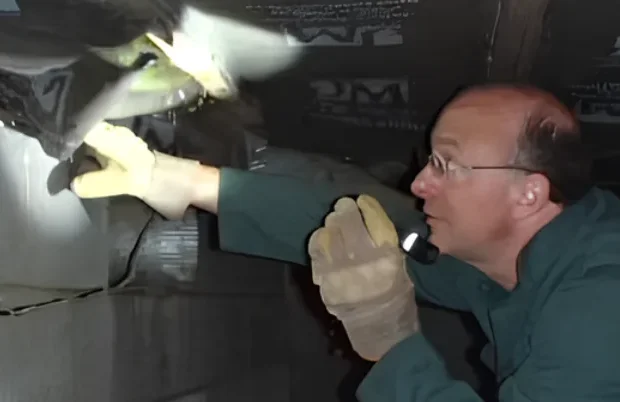
Michael Del Greco has been inspecting Morris County homes since 1993. Here is what he finds most consistently.
Aging Electrical Systems
Knob-and-Tube Wiring
Morris County’s older villages — Madison, Chatham, Chester, Mendham, and the historic sections of Morristown — contain pre-war homes with original knob-and-tube wiring, frequently concealed beneath blown-in insulation added in subsequent decades. This combination creates a documented fire hazard and is one of the most important findings in older Morris County homes. Many homeowners’ insurance carriers require full rewiring before extending coverage on homes with this condition.
Aluminum Branch Circuit Wiring
Morris County saw substantial residential development during the 1960s and early 1970s — particularly in Parsippany-Troy Hills, Rockaway, Mine Hill, and the expanding suburbs of that era. Homes built between roughly 1965 and 1975 frequently used aluminum branch circuit wiring. Full remediation requires either rewiring or CO/ALR-rated devices at every connection point throughout the home.
Undersized Service and Missing GFCI
Pre-1960 Morris County homes on 60-amp electrical service are undersized for modern demand. Missing GFCI protection in kitchens, bathrooms, garages, and exterior locations is consistently found in pre-1980 homes throughout the county.
Plumbing
In Morris County homes built before 1970, galvanized steel supply piping is the norm. Reduced water pressure at upper-floor fixtures in these homes is almost always traceable to corroded galvanized lines restricting flow. Full replacement of a galvanized supply system is a significant project that buyers should price out with a licensed plumber before their contingency expires.
Older Morris County homes on private well systems — common in Chester, Mendham, Harding, Long Valley, and the rural townships — require water quality testing as part of due diligence. Well water testing covers bacteria, nitrates, pH, hardness, and any contaminants relevant to local geology. This is a separate service from the home inspection and should be coordinated before closing.
Oil Heat and Underground Storage Tanks
Oil heat was the standard in Morris County homes built before 1980, and abandoned underground oil storage tanks are among the most significant hidden risks in the county’s older housing stock. Many properties converted to gas decades ago without properly decommissioning the underground tank — leaving a steel vessel slowly corroding in the ground, with residual oil potentially contaminating surrounding soil.
Michael strongly recommends an underground oil tank scan for any Morris County property built before 1985 where oil heat was historically used. This is particularly important in the older villages and rural townships where properties had larger oil storage capacity and where environmental remediation can be more complex due to proximity to private wells and sensitive geology.
Septic Systems
A significant portion of Morris County’s housing — particularly in Chester, Mendham, Harding, Long Valley, Washington Township, and the rural areas of Roxbury and Jefferson — is served by private septic rather than municipal sewer. Septic systems are beyond the scope of a standard home inspection. Michael coordinates septic inspections by qualified NJ septic specialists and strongly recommends one for any Morris County property on private septic.
A failing septic system can be a significant finding that affects both the health of the occupants and the usability of the property. Buyers should confirm the system’s condition, age, and maintenance history before closing — not after.
Radon — Morris County’s Most Important Add-On
Morris County is one of the highest-radon counties in New Jersey. The underlying geology — including significant deposits of uranium-bearing gneiss and granite in the Highlands — produces elevated soil gas concentrations throughout much of the county. The EPA’s Zone 1 designation (highest radon potential, predicted average above 4 pCi/L) covers large portions of Morris County.
Michael recommends radon testing for every Morris County home purchase without exception. He is a licensed New Jersey Radon Measurement Technician (License #MET10521, since 1993). Approximately 90% of his Morris County clients add radon testing, and elevated results — including results well above the 4.0 pCi/L action level — are common enough that buyers who skip testing are accepting a risk they cannot quantify.
Radon mitigation via sub-slab depressurization is effective and reliable. The presence of a mitigation system on a property should be tested to confirm the system is still functioning correctly — a prior system does not guarantee current levels are below the action level.
Foundation and Structural Concerns
Fieldstone and Rubble Foundations
Morris County’s oldest homes — common in Chester, Mendham, Harding, and the historic sections of Morristown — frequently have original fieldstone or rubble masonry foundations. These foundations are permeable, and water intrusion through foundation walls is a consistent finding in these properties. Michael evaluates visible foundation conditions carefully and notes any evidence of structural movement, settlement, or ongoing water entry.
Additions and Modifications
Morris County’s desirable older homes are frequently modified with rear additions, finished basements, dormers, and converted outbuildings. These modifications range from high-quality professional work to unlicensed additions of questionable structural integrity. Michael evaluates the junctions between original construction and later additions — a common location for water intrusion, structural deficiencies, and electrical work of variable quality.
Morris County by Area — What to Expect
Historic Villages: Morristown, Madison, Chatham, Chester, Mendham
These communities contain Morris County’s most historically significant and architecturally distinguished housing. They also contain its most complex inspection challenges: pre-war electrical systems, galvanized plumbing, oil heat legacy, fieldstone or early poured foundations, and a century or more of accumulated modifications. Michael’s inspection in these homes is a thorough evaluation of layered history.
Mid-Century Suburbs: Parsippany, Rockaway, Dover, Mine Hill
Post-war Morris County development produced ranches, colonials, and splits with consistent concerns: aluminum wiring in 1965-1975 construction, aging HVAC systems, and deferred maintenance in long-owner-occupied homes. Parsippany’s significant stock of mid-century housing makes it one of Michael’s most frequently inspected municipalities in the county.
Rural and Highlands Townships: Chester, Mendham, Harding, Long Valley, Washington
Rural Morris County properties introduce private well and septic considerations, elevated radon potential from the Highlands geology, larger properties with more complex roof systems and outbuildings, and in some cases, proximity to environmental features like wetlands that affect drainage and usability. Michael is familiar with the specific due diligence requirements these properties demand.
Schedule Your Morris County Home Inspection
Call (973) 812-5100 between 8 AM and 8 PM on business days, or 8 AM to 5 PM on weekends. Michael serves every Morris County community including Morristown, Madison, Chatham, Parsippany, Rockaway, Chester, Mendham, Harding, Long Valley, Mine Hill, Dover, Denville, Randolph, Mount Olive, Washington Township, Jefferson, and all surrounding towns.
Accurate Inspections, Inc.
56 Woodland Drive, Woodland Park, NJ 07424
(973) 812-5100
Inspecting NJ Homes Since 1993 | NJ Licensed Home Inspector GI0121


