
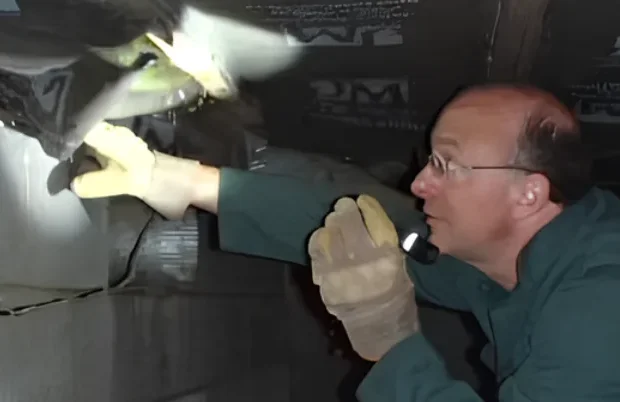



Hudson County is unlike any other county in Michael Del Greco’s inspection territory. It is the most densely developed county in New Jersey — and one of the most densely developed in the United States. The housing stock reflects more than a century of urban construction: pre-war row houses and brownstones in Jersey City and Hoboken, mid-century apartment buildings in Bayonne and Union City, postwar two-families in Kearny and Harrison, and newer condo conversions throughout the waterfront.
Michael has been inspecting Hudson County homes since 1993. Here is what he finds most often.
Urban Housing Stock — What Makes Hudson County Different
The vast majority of Hudson County’s housing was built before 1970. A significant portion was built before 1940. This means buyers are frequently purchasing properties with original or partially-updated systems from eras when building standards were fundamentally different from today’s requirements.
In Hudson County, a home inspection is not a formality — it is an essential tool for understanding what you are buying, what it will cost to maintain, and what risks you are accepting at closing.
Electrical Systems
Knob-and-Tube Wiring
Pre-war homes throughout Jersey City, Hoboken, Bayonne, and Weehawken frequently contain knob-and-tube wiring — either as the original system or mixed with later additions. In row houses and brownstones that have been divided into apartments over the decades, Michael regularly encounters wiring that has been spliced, extended, and modified by multiple owners with varying levels of skill. Improper connections in knob-and-tube systems are a documented fire hazard.
Many homeowners’ insurance carriers will not insure properties with active knob-and-tube wiring, or will require full rewiring as a condition of coverage. This is a buyer conversation to have with their insurer before closing — not after.
Undersized and Overloaded Service
Older Hudson County multi-unit buildings frequently have electrical service that was originally designed for a fraction of modern electrical demand. When individual units have been converted to condos without service upgrades, the result is often overloaded panels, double-tapped breakers, and inadequate amperage for the unit’s actual needs.
Aluminum Branch Circuit Wiring
Buildings constructed between roughly 1965 and 1975 — a period of significant apartment construction in Hudson County — commonly used aluminum branch circuit wiring. The remediation requirements for aluminum wiring are the same in Hudson County as elsewhere: either full rewiring or installation of approved CO/ALR-rated devices at every connection point.
Missing GFCI Protection
In older Hudson County homes and condos, missing GFCI protection in kitchens, bathrooms, and common wet areas is consistently found. It is also consistently fixable — one of the more straightforward safety improvements a buyer can make after closing.
Plumbing
Galvanized Steel Supply Lines
In Hudson County’s pre-1970 housing stock, galvanized steel supply piping is the rule rather than the exception. At the end of its service life, galvanized steel corrodes from the inside — reducing water pressure, discoloring water, and eventually failing. In properties where the water pressure is noticeably low at fixtures, aging galvanized supply lines are almost always the cause.
Cast Iron Drain Stacks
Original cast iron waste and drain piping in pre-war Hudson County buildings is commonly 80 to 100 years old. Cast iron deteriorates from the inside as well as the outside — a stack that looks intact from below may be paper-thin at the horizontal runs and junctions. Michael notes the age and visible condition of cast iron drain systems and recommends further evaluation by a licensed plumber when the system shows signs of deterioration.
Common Area and Shared Plumbing in Multi-Unit Buildings
In condo conversions and multi-unit buildings, the relationship between unit plumbing and building plumbing is important for buyers to understand. A unit inspection covers the plumbing within the unit. The condition of the building’s main stack, the common area supply lines, and the water heater (if shared) are building-level concerns that buyers should investigate through the HOA or building management before closing.
Structural Concerns in Row Houses and Brownstones
Row house and brownstone construction presents specific structural inspection challenges. These buildings share party walls with adjacent properties, meaning some structural elements are not fully accessible or visible. Michael evaluates what is accessible and notes the limitations clearly.
Foundation Settlement
In older urban construction, differential settlement — where one part of the foundation settles more than another — is common and can manifest as sloping floors, sticking doors, cracked plaster, and separation at wall-ceiling junctions. Michael evaluates the pattern and extent of settlement indicators and recommends further evaluation by a licensed structural engineer when the evidence suggests ongoing or significant movement.
Rear Additions and Modifications
Many Hudson County row houses have been modified with rear additions, extended kitchens, or enclosed yards over the decades. These additions are frequently constructed without permits and without the structural attention that original construction received. Michael specifically evaluates the junction between original construction and additions — a common location for water intrusion, settlement, and structural deficiencies.
Parapet Walls
Flat-roofed row houses and brownstones have parapet walls — the low masonry walls that extend above the roofline at the front and rear. Deteriorated parapet walls are among the most common findings in Hudson County urban properties. Failed mortar joints, spalling brick, and improper coping allow water to penetrate the masonry and migrate into the building.
Water Intrusion and Moisture
Water intrusion is the single most common finding in Hudson County home inspections — across every property type, neighborhood, and price point. The combination of aging building envelopes, flat roofing, shared walls, and dense urban development creates conditions where water entry is a persistent concern.
Basement Water Intrusion
Many Hudson County row houses have below-grade or partially below-grade spaces. Staining on masonry walls, efflorescence, and deteriorated flooring are common evidence of past or present water intrusion. Some properties have interior drainage systems installed — Michael evaluates these and notes when their presence indicates a property with a documented water history.
Flat Roof Failures
Flat and low-slope roofing on row houses requires regular maintenance and periodic replacement. Failed membrane seams, deteriorated flashings at parapets and penetrations, and standing water are common findings. Roofing failures on flat roofs can allow significant water intrusion before the evidence becomes visible inside the building.
Window and Facade Water Entry
Failed caulking around window frames, deteriorated lintel flashing, and cracked masonry are common entry points for water in older Hudson County buildings. Michael evaluates the exterior facade carefully and notes conditions that are allowing or likely to allow water entry.
Lead Paint
Hudson County has the highest concentration of pre-1940 housing in New Jersey. Homes built before 1978 may contain lead-based paint — and in pre-1940 construction, the probability is very high. Lead paint that is intact and in good condition poses a lower immediate risk than paint that is deteriorating, peeling, or disturbed during renovation.
New Jersey has specific lead paint disclosure and remediation requirements for rental properties. Buyers purchasing in Hudson County — whether for owner-occupancy or investment — should be aware of these requirements and should consider lead paint testing as part of their due diligence. Lead paint testing is a separate service that can be added to any inspection appointment.
Asbestos-Containing Materials
In pre-1980 construction — which describes the majority of Hudson County’s housing stock — asbestos-containing materials were widely used in pipe insulation, floor tiles, ceiling tiles, roofing materials, and joint compound. Michael notes the presence of suspect materials and recommends testing by a qualified environmental professional before any renovation work that might disturb them.
Condo and Co-Op Considerations
A significant portion of Hudson County’s real estate market consists of condos and co-ops — conversions of older buildings and purpose-built newer construction. Condo inspections have specific considerations that buyers should understand:
- The unit vs. the building — a condo inspection covers the interior of the unit and the systems within it. The building’s common areas, exterior, roof, and shared systems are the responsibility of the HOA or building management. Buyers should request the building’s reserve study and maintenance history before closing
- HOA financial health — a building with deferred maintenance and an underfunded reserve is a buyer risk that no inspection can fully capture. Michael notes observable deferred maintenance in common areas and recommends buyers review HOA financials carefully
- Special assessments — upcoming special assessments for major repairs should be disclosed by the seller. Michael’s observations of building condition can help buyers ask the right questions
Flood Zone Awareness
Portions of Hudson County — particularly areas near the Hudson River waterfront in Jersey City, Hoboken, and Weehawken — are in FEMA-designated flood zones. Flooding from Superstorm Sandy in 2012 affected many Hudson County properties, and buyers of waterfront and near-waterfront properties should verify the property’s flood zone designation, current flood insurance requirements, and any prior flood damage history before closing.
Michael’s inspection addresses the visible and accessible condition of the property. Flood zone status and insurance requirements are separate matters that buyers should research with their insurance agent and real estate attorney.
What This Means for Hudson County Home Buyers
Buying in Hudson County means buying into one of the most dynamic real estate markets in New Jersey — with waterfront views, walkable neighborhoods, and direct access to Manhattan. It also means buying into some of the oldest and most complex housing stock in the state.
The findings Michael documents on Hudson County inspections are not reasons to walk away from a property — they are information. Information that lets buyers negotiate from a position of knowledge, plan for post-closing maintenance, and close without surprises.
Michael requires your attendance at every inspection. Walking through your Hudson County home with him — seeing what he sees, hearing his explanations in real time — is an education in the property you are about to own. Buyers who attend leave with a clear picture of what they are buying. That clarity is the entire point.
Schedule Your Hudson County Home Inspection
Call (973) 812-5100 between 8 AM and 8 PM on business days, or 8 AM to 5 PM on weekends. Michael serves every Hudson County community, including Jersey City, Hoboken, Bayonne, Union City, West New York, Weehawken, Guttenberg, North Bergen, Kearny, Harrison, East Newark, and Secaucus.
Accurate Inspections, Inc.
56 Woodland Drive, Woodland Park, NJ 07424
(973) 812-5100
Inspecting NJ Homes Since 1993 | NJ Licensed Home Inspector GI0121


